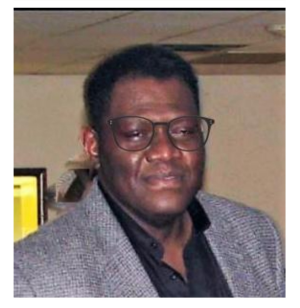
Did the Krios Make Themselves an Unlikeable Bunch in Sierra Leone?
J. Reynold Weekes’ response: Parts I and II
This is a sensitive historical subject, and we must distinguish between historical facts, perceptions, and political narratives.
It is true that during the colonial era, the Krios occupied a privileged position in Sierra Leone’s social, educational, and administrative structure. They were among the first Africans in the region to receive Western education; many became civil servants, traders, clergy, lawyers, teachers, and administrators. This created a social distance between many Krios and the indigenous ethnic groups.
The tragedy of the Krio experience is that they were once viewed by many indigenous Sierra Leoneans as an elite group aligned with the colonial power. Today, however, many Krios see themselves as a shrinking minority struggling to preserve their identity and maintain relevance in a political system dominated by larger ethnic groups. The Krio history is therefore one of both privilege and vulnerability—a community that helped build modern Sierra Leone, but which now wrestles with questions of belonging, representation, and cultural survival.
Historians, I am sure, will note that many Krios worked closely with the British administration and became the face of colonial authority in many communities. To some indigenous groups, the Krios appeared to be beneficiaries of colonialism.
The truth is that many Krios maintained, and dare I say still want to maintain, a strong separate identity and often view themselves as culturally distinct from the indigenous population.
This became more evident to me when I served as President of the Krio Descendants United Organization of California.
Evidence I will save for a second or third part to what I view as the Krio dilemma.
Growing up, many Krios adopted indigenous boys and girls into their homes on the pretext of sending them to school. But was that their intention?
Many of those ‘wards’ or adopted boys and girls became cooks, wood fetchers, housemaids, or, truthfully, ‘servants.’ Scholars and historians have documented how some Krios emphasized their non-indigenous origins and social status. During the nineteenth and early twentieth centuries, Krios were disproportionately represented in professional and administrative positions, creating a perception of elitism.
In modern-day Sierra Leone, the situation is almost the reverse of what existed during colonial times. Krios constitute only a very small percentage of Sierra Leone’s population, generally estimated at around 1–2%. Political power in modern Sierra Leone is largely determined by larger ethnic voting blocs, especially the Temne and Mende bloc communities. Because of their small numbers, Krios rarely dominate national politics and often feel politically marginalized. Many historic Krio neighborhoods in Freetown have changed demographically, and younger Krios often worry about the erosion of distinct Krio culture, language traditions, architecture, and family heritage.
The question to the Krios is, “Do you feel you are being marginalized?” If your answer is yes, then what behavioral changes do you think you need to make?
Part II follow-up: The Krio community is historically centered in Freetown and is also known as the Sierra Leone Creole people.
“Did the Krios unconsciously make themselves an unlikeable bunch in Sierra Leone?”
The story of the Krios in Sierra Leone is often told as one of triumph over slavery. Freed Africans from Nova Scotia, Jamaica, and Britain arrived on the shores of Freetown with hope, education, and determination. They built schools, churches, businesses, and a unique culture that would influence West Africa far beyond Sierra Leone’s borders.
Yet beneath this remarkable success lay another story—one of rivalry among the Krios themselves.
The Krio community was never a single united block. It consisted of people from different backgrounds, occupations, social classes, and political beliefs. As some families accumulated wealth and influence, a social hierarchy emerged. The educated elite often dominated commerce, religion, and public administration. Ambition became a driving force, and with ambition came competition.
Few figures illustrate this tension better than Isaac Theophilus Akuna Wallace-Johnson and former Lieutenant Juxon Smith.
Mr. Wallace-Johnson, a brilliant labor organizer and fiery nationalist, challenged the colonial establishment and demanded greater rights for ordinary Sierra Leoneans. Many admired him for his courage, but others, including some influential Krios, viewed him as a dangerous radical whose confrontational politics threatened the stability and privileges they enjoyed. His greatest battles were not only against colonial authorities but also against fellow Krios who disagreed with his methods and vision.
Years later, Lieutenant Colonel Juxon-Smith would find himself in a similarly complex position. Rising to prominence during Sierra Leone’s turbulent military era, he encountered resistance from multiple quarters. Political loyalties, personal ambitions, and ideological differences divided people who shared the same Krio heritage. Supporters celebrated him as a strong leader, while critics condemned his actions. Once again, the conflict was not simply between ethnic groups but among Krios themselves.
These struggles reflected a larger pattern. Throughout Sierra Leone’s history, Krio politicians, businessmen, clergy, and intellectuals often competed fiercely with one another. Alliances shifted. Friendships fractured. Success sometimes attracted admiration, but it also provoked jealousy, suspicion, and opposition.
The tragedy was that while Krios frequently led Sierra Leone in education, journalism, law, and commerce, internal divisions sometimes weakened their collective influence. Political disagreements that might have remained debates often became bitter personal contests.
Most recently, as a member of the Krio community in California, I received a very disparaging article written by one Pierre Lightfoot-Boston about an outstanding lady, Bertha Yvonne Conton (1923–2022), one of Sierra Leone’s most influential educators and mother of my classmate at the Prince of Wales School, Paul Conton. Mrs Conton was, one could say, solely responsible for the education of generations of Sierra Leonean children through the school she founded and nurtured for over six decades.
In 2012, the Government of Sierra Leone awarded her the Grand Commander of the Order of the Rokel (GCOR), one of the country’s highest national honors, in recognition of her outstanding contribution to education.
As a tribute after her passing in 2022, many Sierra Leoneans described her simply as “a nation builder through education.”
The reason for the disgraceful piece of writing by Mr. Lightfoot-Boston, I later learned, was because Mrs. Bertha Conton’s son, Paul, had mounted an electoral challenge to the President of the Krio group there in Freetown.
I furiously defended Mrs. Conton’s reputation and condemned Mr. Lightfoot-Boston for his disgraceful conduct on a WhatsApp group chat for KDU California. I was demeaned and frowned upon by the majority of the members simply because they had an alliance with the President of the KDU there in Freetown.
Similarly, a friend of mine, a distinguished member of the bar in California, an indigenous Sierra Leonean, sent me a video in which the KDU President Emeritus in Freetown, fresh from meeting with President Bio concerning the destruction of the ‘Krio Ose’, commented that the former Prime Minister, Milton Margai, was (in her videoed voice) a Krio, having been fathered by a Tuboku-Metzegar; “Look im face, na so you see Mende face” she concluded.
Again, I took offense to such insensitive remarks on our Krio forum here in California. These and other objections I raised about the callous behavior of some members of the KDU community towards not only indigenous Sierra Leoneans, but also Krios as well, earned me an ‘enemy of the Krios’ title. Forgetting, or rather ignoring, the fact that I am a born-and-bred Krio from Regent village.
Interestingly, the Krio community that had once united to survive and prosper increasingly found itself fragmented by competing visions of leadership and progress.
Yet I must confess, this is not solely a Krio story. It is a human story. Nearly every successful community has faced the challenge of balancing individual ambition with collective advancement. The Krios are no exception. Their history contains both extraordinary achievements and painful divisions.
Today, as the Krio community represents a smaller percentage of Sierra Leone’s population than in earlier times, many might look back and wonder whether greater unity might have preserved more of their influence. Others might argue that vigorous debate and competition were signs of a dynamic and vibrant people.
Whatever conclusion one reaches, the history of Krios against Krios remains a reminder that communities are often shaped as much by their internal struggles as by the challenges they face from outsiders.
Footnote: Isaac Theophilus Akuna Wallace-Johnson died in Ghana on May 10, 1965, and Andrew Terrence Juxson-Smith died in Staten Island, New York, in 1996. They died while in exile, yet both were given celebrity-like funerals at home. Was it hypocritical reverence or posthumous remorse? Hmmm!
By: J. Reynold Weekes, aka “Di Pa from Regent”