Sierra Leoneans Are Suffocating Under Low Incomes—The Bio SLPP Administration’s Insulting Comparisons Mask a Brutal Reality
During the London edition of the Civic Day Series, Vice President of the Republic of Sierra Leone, Dr. Mohamed Juldeh Jalloh, said that rice, flour, oil, onions, and tomatoes are cheaper in Sierra Leone than in neighboring Guinea and Liberia.
Courtesy video: His comments drew criticism from Sierra Leoneans at home and in the diaspora who argued that continued price pressure in local markets makes such comparisons hard to accept. They pointed to the rising cost of staple goods as evidence that many households are still struggling with affordability.
Sierra Leoneans are being insulted with empty arithmetic and tired excuses. When this administration stands before the public and boasts that rice, flour, onions, and cooking oil are "cheaper" here than in neighboring countries, it exposes a government that has lost touch with the daily suffering of its own people. The poor do not eat statistics. They eat what their wages can buy, and for far too many citizens, those wages are nowhere near enough. Sierra Leone is not being measured against the comfort of officials' speeches; it is being judged by whether ordinary families can survive the week without going hungry.
Video Courtesy: Mamaja Jalloh, also known as DJ Base, for more perspective on this issue. "Saturday Shopping at Lumley Market." Sierra Leone’s national minimum wage is Le 1,200 per month, about $53 USD, as of April 2026. That’s a 50 percent increase from the previous rate of Le 800 set in 2023. But here’s the reality: even with that raise, it still doesn’t go far. For many people, it barely covers basic needs. And that raises a bigger question—why? The answer often points back to systemic corruption and deeper issues that continue to shape everyday life. [Note: To enlarge the video view, use the pinch gesture or tap the blue circle on the video player.]
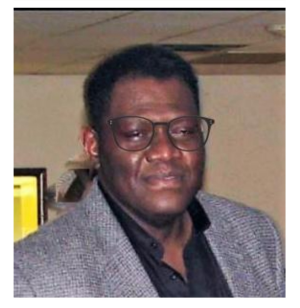
Who Is Alpha Kanu? A Chameleon Politician Who Changes Colors to Serve His Own Greed—Not People
"Three square meals a day are a Western culture. We ate once daily in the provinces." — Alpha Kanu (Maada Bio's Presidential Spokesman)
The tone of this leadership has shifted from negligence to outright contempt. Maada Bio's own presidential spokesman, Alpha Kanu, has declared that hunger and starvation are part of "African culture."
This is not a policy mistake; it is a moral atrocity. It is a statement that dehumanizes millions, as though suffering is inherent to identity rather than a failure of governance. When those in power normalize starvation as a cultural destiny, they reveal a leadership that does not see citizens as people to be protected, but as disposable subjects to be managed.
This government has become addicted to comparison as a shield for failure. Instead of confronting the reality of low incomes, chronic unemployment, collapsing purchasing power, and relentless price pressure, it hides behind regional rankings as though citizens should be grateful for being less miserable than someone else. That is a disgraceful standard for leadership. People are not demanding to be told that their hardship is slightly cheaper than hardship elsewhere. They are demanding dignity, jobs, and fair wages that do not force them to choose between food and survival.
The truth is even darker: what Sierra Leone has in its political class is a bunch of blood-sucking politicians who only seek to enrich themselves. These are not public servants; they are predators who have turned governance into a personal riches machine while the nation rots. They treat the people as disposable—valuable only when votes are needed, invisible when hunger strikes. And the poor are lectured on "culture" instead of being given bread.
The cost-of-living crisis is not some invented grievance. Independent reporting has pointed to soaring staple prices, severe food insecurity, and inflation that has left ordinary households under crushing pressure. So when officials lecture citizens with smug comparisons, and when their own advisors/spokespersons call hunger "culture," they are not defending policy—they are mocking pain.
A government that cannot raise incomes to a livable standard, protect livelihoods, connect its own people to affordable markets, and stop treating citizens as disposable has no moral authority to celebrate cheapness in the abstract. When people are hungry, underpaid, stranded by neglect, and told that starvation is "culture," being told that things are worse elsewhere is not comfort—it is contempt.
The people are suffocating. The politicians are feeding. And the gap between them is widening into a moral abyss.
YAME Digital