READ: The Great Transatlantic Japa. Explainer: what is known, what hasn't been confirmed, and the questions authorities haven't answered.
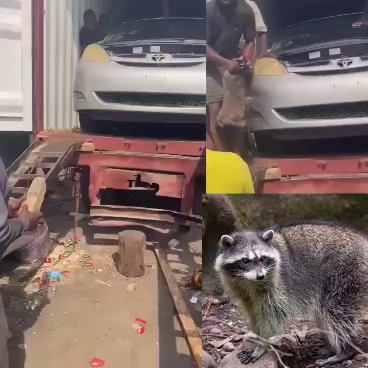
A raccoon survived a roughly six-week, 6,000-mile trip from Canada to Lagos, Nigeria, inside a sealed 40-foot shipping container. Workers unloading the container found it alive. Video of the discovery spread on social media around November 24, 2026.
The surprise passenger
Workers expected cargo. The container held a vehicle, reportedly a Toyota, along with food items. The raccoon appears to have slipped in before the container was sealed.
Surviving on the cargo
The raccoon apparently survived by eating the food packed in the container. Those who witnessed its removal described it as "robust and healthy." The video has drawn wide attention and comments across social media.
Meet "Rony"
Animal welfare advocates nicknamed the raccoon "Rony," and the name caught on as the video circulated. Online, debate split between those who saw Rony as food and those who wanted him sent to a rescue center.
What happened to Rony
Rony was reportedly killed after his discovery. Wildlife researcher Mustapha Iskil Gbolahan, professionally known as Arojinle, called the killing sad and asked why no one considered rescuing the animal. Later that same evening, he confirmed in a follow-up post on X that the raccoon had been killed before wildlife rescuers could reach it. He also voiced frustration over how unfamiliar animals are treated in Nigeria. No other outcome has been reported.
It has happened before
Stowaway raccoons are not unheard of. Deccan Herald reported on 1 January 2024 that a wildlife group rescued a raccoon in Palghar district, Maharashtra, India. It had hidden behind goods in a container shipped from the United States, and it was badly dehydrated after about 60 days inside.
The wider concern
The case raises biosecurity questions about how thoroughly incoming cargo is inspected, and as of publication, Nigerian port, customs, and wildlife authorities had not issued a public statement.
Theo Edwards for YAME Digital