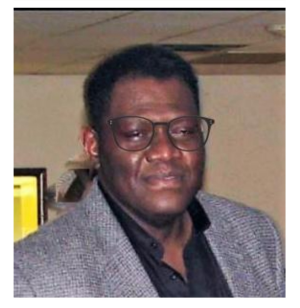
Out of Touch: A Chief Minister Who Does Not Know His Own Salary
When a senior official responsible for coordinating government delivery says he does not know the amount of his publicly funded salary, Sierra Leoneans are entitled to ask serious questions about transparency, accountability, and the distance between those in power and the people they serve.
The exchange with Umaru Fofana during the wide-ranging interview may have revealed more than an awkward answer. It may reflect an underlying attitude, a sense of insulation from the everyday realities confronting ordinary Sierra Leoneans.
A full interview with the Chief Minister, Dr. Moinina David Sengeh, on the State of the Nation program with journalist Umaru Fofana.
There are political answers that are unfortunate. Some answers are clumsy. And then there are answers so detached from public reality that they become a warning sign.
When Chief Minister David Sengeh reportedly told Umaru Fofana on AYV’s State of the Nation that he does not know his own salary, he did more than dodge a straightforward question. He exposed a troubling distance between the people who govern and the people who must live with the consequences of governance.
This is not an obscure official whose work has little bearing on the daily lives of citizens. This is the Chief Minister, the central coordinator of government business, policy delivery, and the machinery of the state. If the person at the heart of government coordination cannot tell the public what he earns from the public purse, Sierra Leoneans are entitled to ask: who, exactly, is keeping track?
The question of a public official’s salary is neither disrespectful nor trivial. It goes to the core of accountability. Taxpayers fund a Chief Minister’s remuneration. It should not be a mystery, a guess, or an afterthought. It should be information that can be stated confidently, verified easily, and defended openly.
“I don’t know” may have been intended as a casual remark. But casualness is itself the problem. For ordinary Sierra Leoneans, salary is not an abstract figure. It is the difference between food and hunger, transport and walking, a child remaining in school or being sent home, medicine being purchased or an illness being endured. Citizens know exactly how much they earn because every Leone has a destination before it even arrives.
That is why this answer has struck a nerve. It sounds less like humility and more like arrogance. It gives the impression of an official so removed from the economic pressure facing ordinary households that he can afford not to notice what enters his own account.
No one is arguing that government officials should not be paid. Public service must be properly compensated. But public service also demands public accountability. A leader entrusted with coordinating government delivery must be held to an even higher standard of openness, not a lower one.
The Chief Minister now has an opportunity to correct the record. He should clearly state his official salary, allowances, and benefits; identify the approved legal framework for that compensation; and make plain that public money is not beyond public questioning.
Sierra Leone does not need leaders who treat transparency as an inconvenience. It needs leaders who understand that accountability is not a performance for interviews; it is the minimum price of holding power.
The political lesson
The exchange appeared to reveal an underlying sense of detachment and insensitivity. A Chief Minister’s credibility is not strengthened by sounding defensive, but by responding with clarity, accountability, and humanity when a comment lands badly.
My advice to David Sengeh would be to issue a brief, direct clarification. He should recognise why the response resonated with many people. For ordinary citizens, income is not an abstract or academic matter; it determines whether there is food on the table, transport to work, rent paid, school fees met, and medical care obtained.
Whatever the intention behind the remark. Saying, “I don’t know,” when asked about one’s salary can therefore sound indifferent, even if that was not the intended meaning. The better leadership response would be simple: “I understand why this matters. Here are the facts, and you have every right to hold me accountable.”
Shortly after his wide-ranging interview last week with Chief Minister Dr. David Sengeh of the Bio administration, journalist Umaru Fofana went on air to allege that AYV’s website and app had been targeted in what he described as “elite hacking.” Here is what he said:
Theo Edwards for YAME Digital