Lenses Behind Bars: A Prosecutor Becomes an Inmate
A prison holding more than twice the number it was built for cannot rehabilitate.
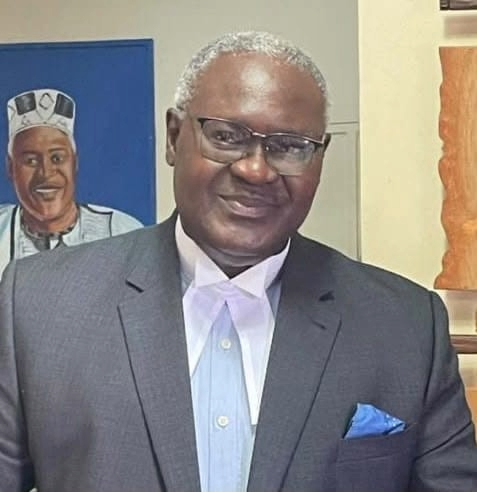
Joseph Fitzgerald Kamara (widely known as JFK)
I have spent most of my professional life on the side of the prosecutor. I served as Senior State Counsel at the Law Officers’ Department, Deputy Prosecutor at the Special Court for Sierra Leone, Commissioner of the Anti-Corruption Commission, and Attorney-General and Minister of Justice. I believed I understood the criminal justice system: its statutes, its courts, its procedures and its prisons.
Recently, for almost a week, I saw that system from the inside, not as prosecutor but as an inmate at the Male Correctional Centre at Pademba Road. I will not relitigate the circumstances of my detention. I respect the court. What I want to share is what the experience taught me; not about myself, but about the thousands of Sierra Leoneans who remain inside our prisons long after I was released.
Pademba Road was built for a fraction of the population it now holds. Nationally, our prisons were designed for just over 2,000 people, yet they hold more than 5,000. The overwhelming majority are remand detainees; people who have not been convicted, awaiting trial in a system that moves far too slowly.
As Attorney-General, I had tried to act on this reality. Within my first hundred days, my office secured the release of five hundred people held on flimsy charges or without indictment. With the Legal Aid Board, we dealt with over fifteen hundred cases and secured the release of hundreds more. I knew, intellectually, that the system was broken. But there is a difference between knowing and experiencing. When the prosecutor becomes the inmate, the lens shifts.
What shifted was not my understanding of the law on the books. It was my sense of what the law feels like when it is delayed. In prison, time is not measured by statutes or court calendars. It is measured by waiting: waiting for a file to be called, for a date to be fixed, for a lawyer to appear, for family to visit, for someone to remember you. On one occasion I smiled when I had a fleeting thought about the possibility of conjugal visits. That smile lasted a few seconds, before the sound of the bell for roll call.
A remand detainee is presumed innocent, but every morning behind bars punishes him as though guilt were already settled. Overcrowding is not an abstraction. It is the air you share, the space you sleep in, the queue for sanitation, the tension among men with nothing to lose. I saw men who had not been convicted of anything, whose cases had stalled, and whose liberty depended on a system too slow to notice them.
My few days were a privilege compared with the years endured by those who have no wig to remove, no Bar to return to, and no voice to be heard.
This is not only a humanitarian crisis. It is a justice crisis and a public safety crisis. A prison holding more than twice the number it was built for cannot rehabilitate. A remand population larger than the convicted population means the system is punishing people before proving guilt.
The reforms are not mysterious. First, Government should establish regular, statutory remand reviews so that no detainee is left in custody without a documented court date and a decision on bail. Second, the Legal Aid Board and the courts need resources for dedicated remand courts, case management and faster disclosure. Third, we should expand alternatives to detention, effective bail guidelines, and community service.
As a former prosecutor, I know public safety matters. These reforms are not soft on crime. They are hard on delay, illegality and neglect.
The measure of a criminal justice system is not how it treats a former Attorney-General who spends a week behind bars. It is how it treats the inmate who has no wig to remove, no Bar to return to and no voice to be heard. Let us listen to the cries for justice behind bars.
By Joseph Fitzgerald Kamara, Esq. | @JFKSalone