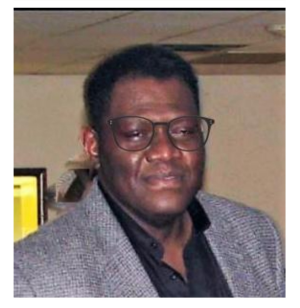
He Armed a War. He Died in Peace. The Timber Baron Who Helped Turn Liberia Into an Arsenal
This is the story of the machinery that let him die comfortably while survivors were left with the consequences. Guus Kouwenhoven was convicted and sentenced to 19 years for illegal arms trafficking and complicity in war crimes. He fought extradition in South Africa and died without serving a day of that sentence.

Guus Kouwenhoven leaving a Cape Town courthouse. Published by NOS in connection with the South African extradition proceedings.
Guus Kouwenhoven, the Dutch timber magnate convicted of feeding weapons into Charles Taylor’s wars, has died comfortably in South Africa at 84 years old, surrounded by family, and beyond the reach of the 19-year prison sentence he spent his final years outrunning.
Guus Kouwenhoven did not die in a cell. He did not die waiting for a verdict. He did not die forced to account, in public, for the wars that turned Liberia into a marketplace of guns, timber, blood and power. He died peacefully (… the final judgment of every life rests with God) in South Africa on September 6, 2026, according to his family, surrounded by relatives, at peace, and still free.
For years, Kouwenhoven had been one of the Netherlands’ most notorious fugitives: a Dutch businessman whose Liberia-based timber empire became inseparable from the military machine of Charles Taylor, the warlord-turned-president whose rule helped ravage Liberia and destabilize the region.
As head of the Oriental Timber Corporation, Kouwenhoven was not merely another foreign investor operating at the edges of a failed state. Dutch courts found that he helped supply Taylor’s regime with weapons and ammunition, enabled their storage and distribution, and assisted forces fighting in the conflicts that engulfed Liberia and Guinea. In 2017, the Court of Appeal in ’s-Hertogenbosch sentenced him in absentia to 19 years in prison for illegal arms trafficking and complicity in war crimes. The Dutch Supreme Court upheld that conviction in 2018.
But a sentence on paper is not the same thing as justice.
Kouwenhoven fled to South Africa, where he was arrested in Cape Town in December 2017 and released on bail. The Netherlands wanted him returned to serve his sentence. South Africa eventually declared him an undesirable person and revoked his visa. Yet years of court challenges, appeals and procedural delay kept the convicted arms trafficker out of Dutch custody. Even after South Africa’s Supreme Court of Appeal cleared the legal ground for extradition, the process dragged on.
And then time did what the courts could not.
Kouwenhoven died without spending a day in a Dutch prison for the crimes for which he was convicted. He did not board an extradition flight. He did not enter a prison gate. He did not live out the 19-year sentence imposed in the name of accountability for the victims of Liberia’s wars. His family described a peaceful death. For those whose lives were shattered by the conflicts his business helped sustain, peace was rarely so available.
Taylor got prison.
Charles Taylor’s fate was different, though not enough to erase the broader failure.
Taylor resigned as Liberia’s president in 2003, went into exile in Nigeria, and was arrested in 2006 before being transferred to the Special Court for Sierra Leone. In 2012, the court convicted him on 11 counts of aiding and abetting war crimes and crimes against humanity committed during Sierra Leone’s civil war, sentencing him to 50 years. His appeal failed in 2013, and he was transferred to the United Kingdom to serve the sentence. Taylor became the face of a warlord’s impunity finally interrupted.
Kouwenhoven represented something colder: the international businessman whose role could be described in the language of contracts, concessions, shipments, equipment and trade, words that can obscure the human cost of the machinery they support. Timber was not simply timber. It was access, money, logistics and influence. And, prosecutors established, it was part of the infrastructure that helped put weapons in the hands of Taylor’s forces.
The final verdict
Kouwenhoven’s death closes no moral account. It closes a legal one without satisfying it. A court convicted him. Another court upheld the conviction. Authorities sought his extradition. His visa was revoked. Yet he died in a private home rather than a prison cell, while a 19-year sentence remained unenforced.
That is the darkest part of the story: not that justice failed to recognize what happened, but that it recognized it, and still arrived too late.
Charles Taylor, once known for power, white suits and presidential privilege, reportedly cooked his own meals and washed his own dishes while awaiting trial in The Hague. Today, he remains incarcerated at HM Prison Frankland in County Durham, England, serving a 50-year sentence for war crimes and crimes against humanity.

Former Liberia President Charles Taylor, is said to frequently cooked his own meals while serving his 50-year prison term.
Theo Edwards for YAME Digital